
Shared meals, nature and human connection
— TrustGaia
One of the quiet surprises of running retreats — and one of the things guests mention most often afterwards — is how much the shared meals matter. Not the practices, not the ceremony, not the yoga. The meals. Or rather: what happens around them.
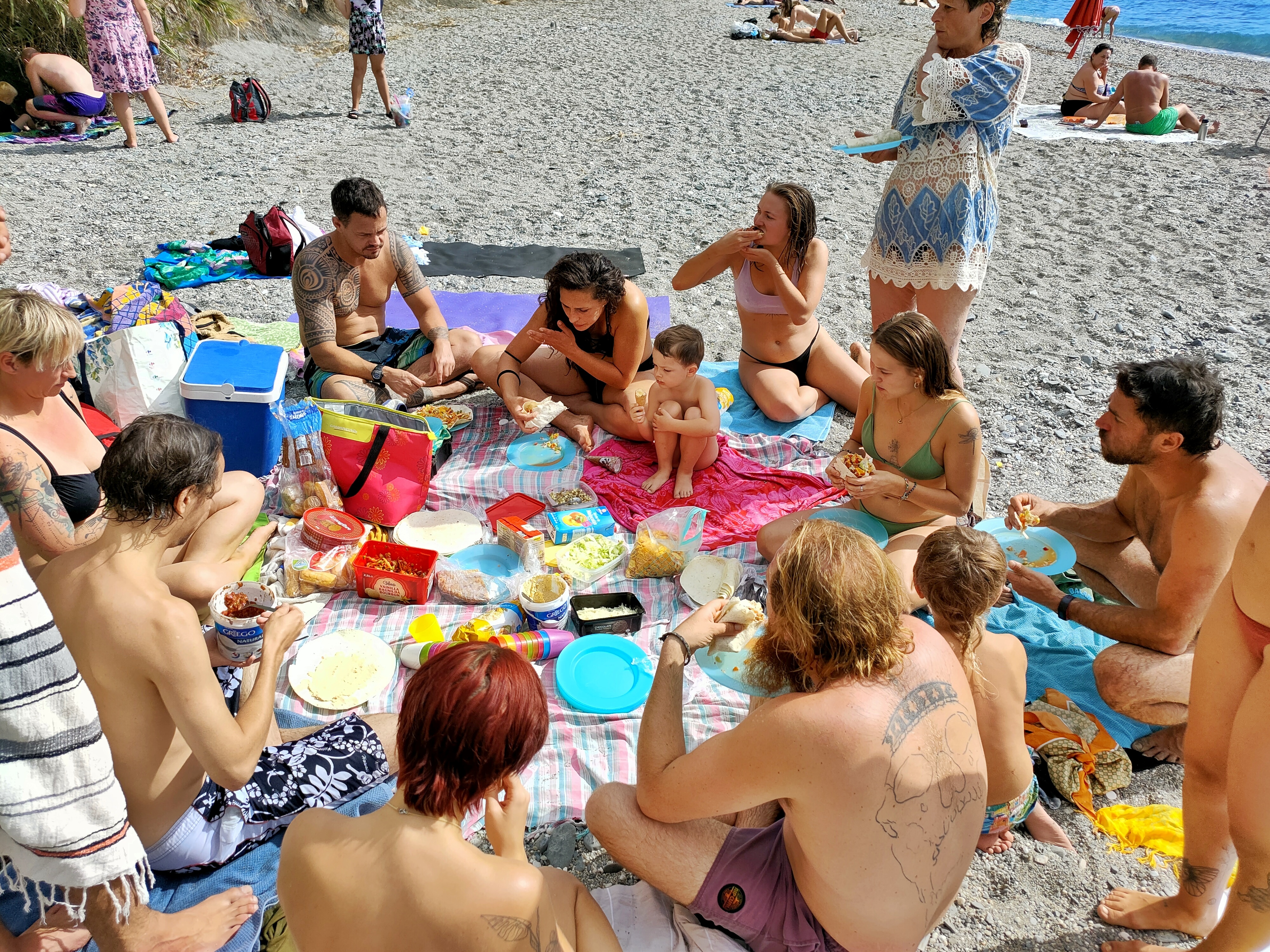
We usually set a long table outside, either up at the yurt or, once during each retreat, down on a quiet stretch of beach. People bring themselves as they are — barefoot, still a little tired from the morning, sometimes freshly rinsed from a swim. Food is simple and seasonal: something from the garden, something local, bread, olive oil, fruit, water and tea. No one is performing hospitality. No one is checking their phone. There is enough time.
And something happens.
**A slower nervous system.** Modern eating happens fast. Standing, driving, at a desk, in front of a screen. The body registers this as a mildly stressful activity even when we do not notice — food arrives before we are settled, we chew quickly, we move on. An unhurried meal outdoors reverses that pattern in a way that is measurable, not mystical. Sitting down, breathing more slowly, chewing longer, speaking and listening at a human pace — the parasympathetic branch of the nervous system, the one that rests and digests, gets a chance to take the lead. You leave the table lighter and calmer than you sat down.
**Real conversation, without performance.** People who come on retreat often have not eaten this way in months. The pattern indoors is either functional (a quick lunch alone) or performative (a dinner with an agenda). Around a long outdoor table, with no one to impress and nowhere else to be, conversation shifts. It slows. It moves in and out of silence without anyone feeling the need to fill it. Small stories come up — about a parent, about a job that no longer fits, about a walk taken years ago. This is not therapy and no one is asked to share anything. It is just what happens when the setting no longer demands a performance.
**The natural setting is not a backdrop, it is a participant.** There is something the outdoors does that a beautifully decorated indoor room cannot. Wind moves through the meal. Light changes. A bird calls, and everyone hears it. A shadow lengthens across the table. The senses register these small events, and the mind, which was busy on the drive up, begins to let go of what does not need to be held right now. Nutritionists talk about eating with your senses. That is easier when your senses are actually being used.
**Belonging, quickly.** Retreat groups are usually people who did not know each other twenty-four hours earlier. By the second shared meal, something has often shifted. It is not artificial closeness — we do not do bonding exercises, no one has to introduce themselves in a circle if they do not want to. It is simpler than that. Eating together, more than once, without an agenda, is one of the oldest ways humans have made a group. The nervous system reads it as safety: I am at a table, no one is trying to sell me anything, there is food, there are people, this is fine. That reading is not new. It is very old, and our bodies still know it.
**A word about what we serve.** The food at TrustGaia is not the point. We are not a culinary retreat. What we serve is honest, seasonal Mediterranean food — as much as possible grown nearby, prepared without fuss, and generous. There is always enough. If you eat plants only, we cook for you without ceremony. If you have allergies, tell us and we adjust. What we care about is not the menu but the way the meal is set: outdoors when weather allows, at a long table, with time.
**A few practical thoughts** if you want more of this in your own life, without going anywhere:
Eat outdoors more often, even if the setting is modest. A balcony, a park, a garden, a doorstep in the sun. Ten minutes with a piece of bread and some fruit, on a bench under a tree, is a different meal than ten minutes at your desk. The body notices.
Eat with other people, more slowly, without a screen. Once or twice a week, if that is what fits. The exact food matters less than the pace and the presence.
Let silence sit at the table. Not as a rule, not as a practice — just as something allowed. Meals do not have to be filled with words. Some of the best moments at our beach table happen when the conversation dies down and no one rushes to revive it.
Do not perform hospitality. If you host, keep it simple. Fewer dishes, more time. Guests will remember that you were relaxed long after they have forgotten what you cooked.
**A closing note.** People sometimes ask us what the 'active ingredient' of a retreat is. What is the practice that makes the difference. We usually say breath, or nature, or ceremony, and all of that is true. But if we are honest, the ingredient that most people remember months later — the one that quietly changes how they eat at home, how they gather friends, how they treat their own weekdays — is the meal outside. The one where nothing much happened, and everything did.
We hope, when you come, that you find your way to that table. And that a little of it comes home with you.