Cold water immersion — a practical guide
— TrustGaia
There is a moment, just before you step into cold water, when the whole nervous system braces. The breath shortens. The shoulders lift. The mind offers a hundred reasons to turn away. And then — you go in.
What happens next is one of the most reliable resets the body knows. In a few short breaths, cold water becomes a teacher: of composure, of presence, of the quiet strength that lives underneath our reactions.
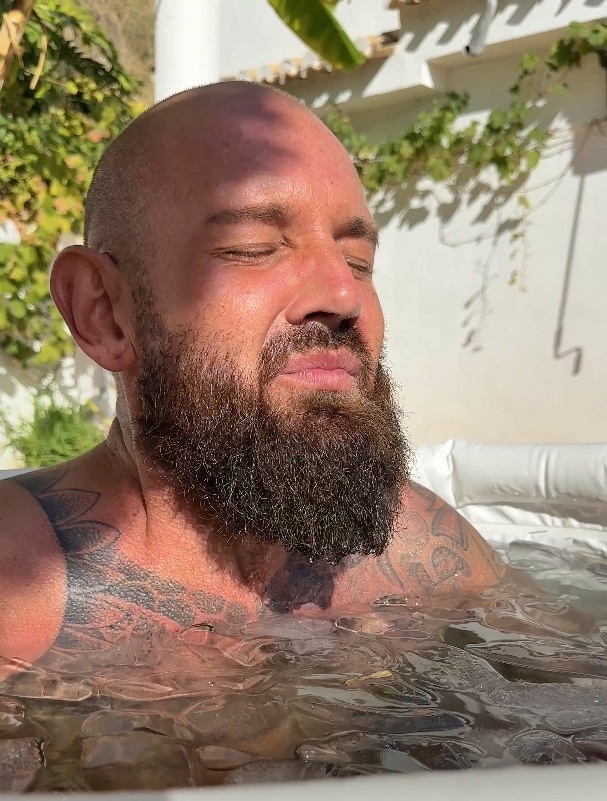
At TrustGaia we practice cold water immersion year-round, both in a simple wooden ice bath at the finca and in the Mediterranean below. This is a slow, honest introduction — not a prescription, not a challenge, and not a substitute for medical advice. It is an invitation to meet the cold with respect.
## Why the cold works
When the body is submerged in water below roughly 15°C, a cascade of responses unfolds within seconds. Blood vessels at the surface constrict, sending warm blood inward to protect the core. The vagus nerve — the long, wandering nerve that governs so much of our rest-and-digest state — is stimulated by the cold on the face and neck. Noradrenaline and dopamine rise. Inflammation quiets. Attention sharpens.
None of this is magic. It is physiology. But the felt experience is often the more interesting story: a sudden, undeniable arrival into the present moment. The cold makes it very difficult to be anywhere but here.
## The breath is the practice
Cold water immersion is, in many ways, a breathing practice with water as its teacher. When you first enter, the body will try to gasp. This is a normal reflex; it is not an emergency. The task is simple: slow the exhale. Let it be long, soft, unhurried. If the breath can stay steady, the mind will follow.
We often say at retreats: you are not trying to be tough. You are trying to be kind — to a body that is doing something new. The cold does not need to be conquered. It asks to be met.
## Beginning at home
You do not need a wooden barrel or the sea to begin. A cold shower is enough. Finish your normal shower with 30 seconds of cold water on the back of the neck, the chest, and the face. Focus on a long exhale. That is a full practice. Over time, extend to a minute, then two.
When you are ready for immersion — a bath at home filled with cold water, or a natural body of water — begin with 60 to 90 seconds. Never alone in open water. Never after alcohol. Never if you are pregnant, have a heart condition, or have been told by a doctor to avoid cold exposure. Warm up slowly afterwards, with gentle movement and dry clothes, rather than a hot shower straight away.
## What we notice at the finca
After a cold session at TrustGaia, most people report the same three things: a bright, clean sense of aliveness; a quiet mind; and, unexpectedly, warmth — a deep internal heat that arrives ten or fifteen minutes later as the body rebalances.
There is often laughter, too. Something about meeting the cold together dissolves the small formalities between people. It is one of the reasons we include it in almost every retreat: cold water strips the day down to what is essential.
## A note on humility
Cold water is not for everyone, and it is not for every day. Listen carefully. If the breath cannot settle, come out. If a session leaves you shaky for hours afterwards, it was too long. Progress in this practice is measured in ease, not in duration.
The goal is not to become someone who can endure the cold. The goal is to become someone who, after a few minutes with the cold, walks back into ordinary life a little more themselves.
The water is patient. It will still be here tomorrow.